Barry Hannah on WWII & Writing

The great lit Web site The Rumpus has an intriguing piece about the late, great Barry Hannah. Apparently he was a bit of a WWII buff and gave a lecture at Bennington entitled “Military History as Regards Fiction: The Unquenchable Thirst about World War II.” Man, what I would’ve given to have been there.

Brooklyn writer A.N. Devers, who was lucky enough to have been in attendance, writes:

In the lecture he explored how a generation of soldiers came back from the war with a passion for literature. He mentioned that returning vets enrolled in school, feeling that they didn’t have time to “mess around.” Barry identified with the returning Vietnam vets and said an MFA program saved his life. He reminded his audience that the “greatest generation” had been fighting “real evil.” He said something about how he wasn’t impressed by science fiction and that “nonsense in outer space” because it had already happened – even Star Wars had the Nazi helmet. He said that Norman Mailer, William Styron, and Gore Vidal didn’t expect to be as educated as they were, or own the world as they did, or be a part of the only nation to drop an A-bomb in 1945. He mentioned the Cuban Missile Crisis, Iraq, and Iran – and that we can’t really know what these wars are like for the silent men who return – those suffering with PTSD. There were a lot of one-liners in this lecture. My notes say: A writer is not romantic … but better be having fun. He said: “I think you can imagine my almost total disinterest in e-mail.” The lecture is also filled with mantras: People didn’t die in vain. A single person could make a difference. You’ve got to teach something to exist. You’ve got to act to exist. I thought existentialism meant you’ve got to have a turtleneck and smoke cigarettes. It’s harder and harder to write because you don’t have to surprise anyone anymore. The best job you can do is not to know more, but to know what you like, and like it passionately. The lecture, despite my inability to tie everything together here, was exceedingly well constructed.

He said, in closing: “I grew up believing life is precious. Objects are precious.” He listed the pencil, the pen, and the Smith-Corona Electric. He quoted Solzhenitsyn and talked about Cormac McCarthy’s Blood Meridian. He encouraged us to sit in a room alone and show what we can do.

On Reality & Its Discontents

Quite possibly the most brazenly insubordinate and thought-provoking book I have read since Walter Benjamin‘s landmark essay “The Work of Art In the Age Of Mechanical Reproduction” is David Shields’s highly hyped “manifesto,” Reality Hunger. (Inverted sentence structure intended, BTW.)

I don’t know if I am yet prepared to follow Shields into the novels-are-not-really-novels wilderness, but I do share his frustration with the reading and writing of fiction nowadays. This frustration, it seems, is infectious: see Zadie Smith‘s bracing Changing My Mind: Occasional Essays, in which she questions the purpose of the novelist in today’s world.

As Shields has it,

[Writing fiction] feels like driving a car in a clown suit. You’re going somewhere, but you’re in a costume, and you’re not really fooling anybody.

and

Living as we perforce do in a manufactured and artificial world, we yearn for the ‘real,’ semblances of the real.

and even

I doubt very much that I’m the only person who’s finding it more and more difficult to want to read or write novels.

A deserved slap to the side of the faces of storytellers, perhaps. A conversation starter, at least.

What is more real? So-called nonfiction (“reality”) or so-called novels (“imagination”)? What is the relationship between reality and the imagination? Why would anyone read–or, for that matter, write–novels in this day an age, when oftentimes the reading public will gravitate toward the nonfiction tome over the novel? These are trenchant, age-old questions that harken back to that perennial candidate for the first novel ever, Don Quixote. For me, the fiction/nonfiction debate (“throwdown”?) strikes a personal chord. It’s no secret my first novel came out in the overwrought shadow of that other book about the 1893 Chicago World’s Fair, and, as Shields and Smith would have it, it’s also no secret readers devoured the nonfictional version of the story with more ferocity than they did the fictional version. (I don’t mean to imply my book is any better than the other, I-still-cannot-bear-to-utter-its-name book.)

As I feverishly read Reality Hunger–and, earlier today, a frolicsome chat with Shields over at The Millions–I was frequently reminded of something Richard Powers said to me in our Believer interview:

A chemist can say how atoms bond. A molecular biologist can say how a mutagen disrupts a chemical bond and causes a mutation. A geneticist can identify a mutation and develop a working screen for it. Clergy and ethicists can debate the social consequences of pre-implantation genetic diagnosis. A journalist can interview two parents in a Chicago suburb who are wrestling with their faith while seeking to bear a child free of inheritable disease. But only a novelist can put all these actors and dozens more into the shared story they all tell, and make that story rearrange some readers’ viscera.

As I’m once again lost at sea with a longer fictional project, I sure hope he’s right.

My First Time with a Salinger

I don’t remember where I was. The library stacks, where a rose-cheeked high-school junior I had a crush on hung out? The alley behind La Petite, where my delinquent friends smoked bowls during lunch hour? A bookstore on the South Side? Or, actually, no, now I remember: I was in college, shamefully belated in my discovery of the ur-text of teenage misanthropy and melancholia, and I was supposed to be in “Molecular Biophysics: Theory & Applications” (we had a test the following week, or was it the following day?), and instead I decided to take the afternoon off, head back to the dorm for a little R&R, maybe work on whatever shapeless and senseless novel I was trying to write at the time, maybe see if a Seinfeld rerun was on, and it was cold — I remember clearly, though it was already April, it was very, very cold — and I got a to-go coffee and was passing by 57th Street Books, where I tended to spend my truancy. Although normally I zeroed into the “P”s in Fiction, in case a new Pynchon had magically appeared overnight, without anyone knowing about it, this time I lollygagged around the “S”s.

There it was: “Nine Stories,” by JD Salinger, the other recluse. The one I avoided lest I piss Mr. P. off. Hiding behind my guilt, I removed the Salinger and opened to a random page, which turned out to be page 3, the first page of “A Perfect Day For Bananafish.” I lingered by the corner chair, obscuring the cover, mostly out of embarrassment–if anyone saw me reading Salinger, I feared, they’d come over, start chatting about how they loved this or that, and when my turn came to gloat, I’d freeze up and my secret would be revealed.

That didn’t happen, and I wish I could say I started reading right then and there, not stopping for an hour and fifteen minutes, dizzy and delirious, but what actually happened was far less, um, romantic. Cheap bastard that I was (and, some would say, still am), I put the book back on the shelf and instead blitzed on over to the Regenstein library. “Nine Lives” was checked out, but “Franny and Zooey” was there. It was a well-worn first edition, and it still had the original checkout slip in back.

I didn’t notice this until a day or two later, back at the dorm, but I recognized the first name on the list.

Bellow, it said in a slightly slanting cursive.

Saul fucking Bellow.

Most Influential Novels of the Decade

Not the “best,” necessarily, but these are the novels, I think, which will cast the longest shadows to the writers of the future.

2000
Dave Eggers, A Heartbreaking Work of Staggering Genius

2001
Tie: Ian McEwan, Atonement; Jonathan Franzen, The Corrections

2002
Jeffrey Eugenides, Middlesex

2003
James Frey, A Million Little Pieces (now that we know it’s a novel)

2004
David Mitchell, Cloud Atlas–although I am tempted to say The 9/11 Commission Report: if, as DeLillo alleged, the Warren Report was the greatest novel since Finnegans Wake, then surely The 9/11 Commission Report must at least be a novel (if not exactly Jamesian).

2005
Haruki Murakami, Kafka on the Shore

2006
Thomas Pynchon, Against the Day

2007
Denis Johnson, Tree of Smoke

2008
Roberto Bolano, 2666

2009
Padgett Powell, The Interrogative Mood

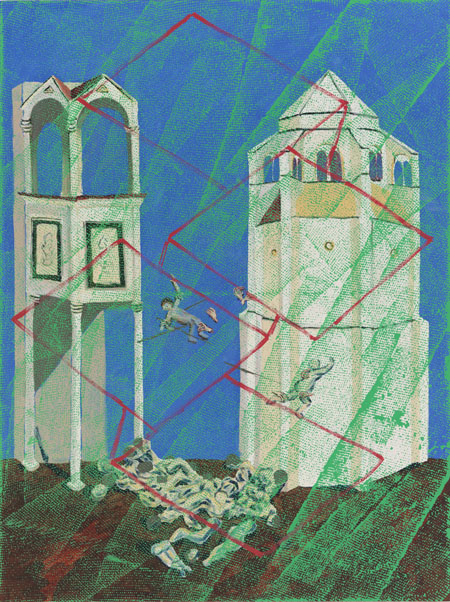
My brilliant Mom, the Abstract Expressionist

The phenomenally talented and innovative Susan Michod, who happens to be my mom, is part of an online show over at the esteemed Chicago-based Koscielak Gallery.

Her new work, which in my opinion ranks among the best of her long and thoughtful career, are vivid and vigorous “mash-ups,” so to speak, of familiar images from the Renaissance canon (Giotto, da Vinci) and the isometric perspective drawings of Josef Albers. Check out Expulsion of the Devils (after Giotto), or The Last Supper (after da Vinci)and one of my favorites, Sneaky Bunny.

3

7

What I’m Reading

  • Don DeLillo, Point Omega
  • Sam Lipsyte, The Ask
  • Lydia Davis, The Collected Short Stories
  • Joshua Ferris, The Unnamed

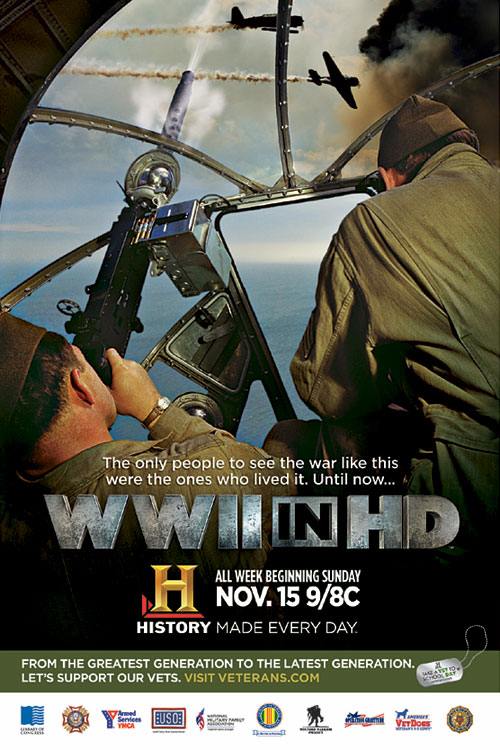
WWII in HD

I was a writer of a 10-hour History Channel documentary mini-series, WWII in HD.

It’s a pretty gripping project, narrated by Gary Sinise and featuring additional voices by Steve Zahn, Justin Bartha, LL Cool J, Ron Livingston, Amy Smart, and Rob Lowe, among others.

Watch the trailer.

“Four stars…a fresher angle on a war already analyzed in hundreds of millions of words.”  Daily News

“Masterfully edited…at times you forget you are watching a documentary.”  LA Times

“A big, brawny look at the war – in color… it’s terrific.”  Newsday

“This is the war the way they lived it… fresh and disturbing.” New York Times


wwii in hd